You can still have your donation DOUBLED and be an Anchor of Hope for all of our residents, like Reesa. |
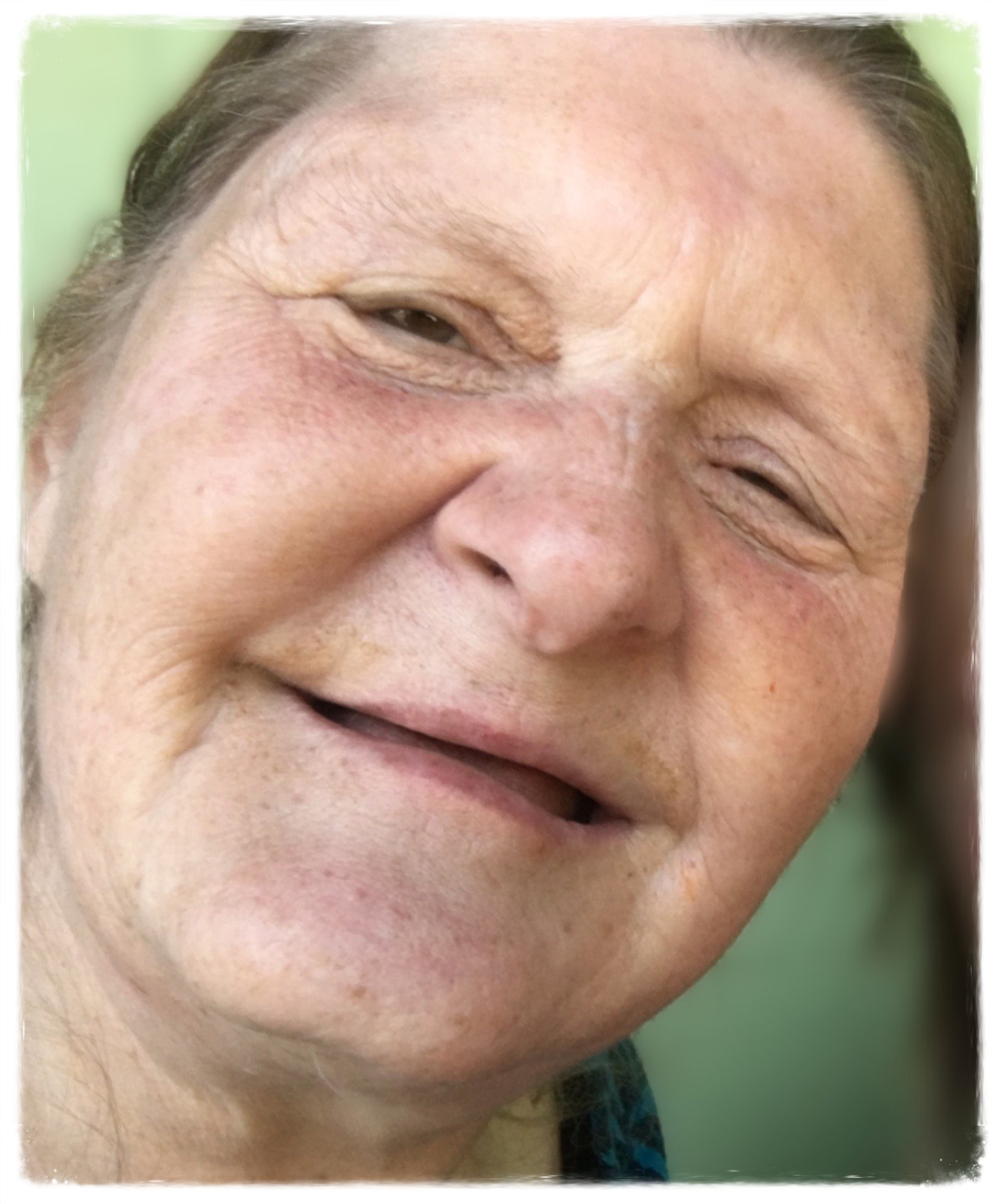
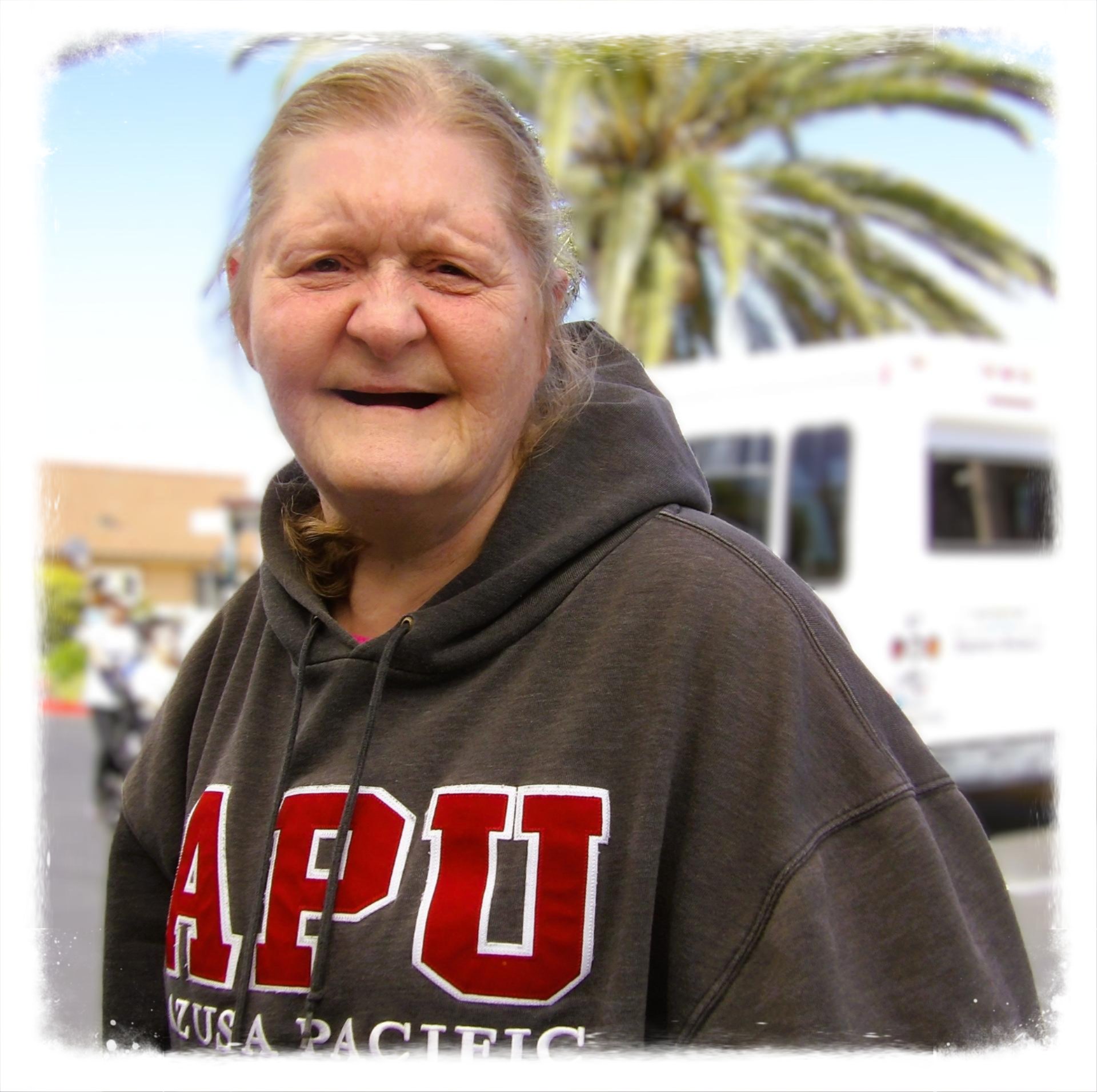
MSCH-San Diego resident, Reesa. |
Mountain Shadows Resident, Reesa: No One Told Her She Couldn’t Walk – So She Did! |
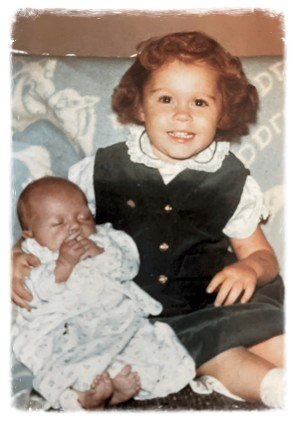
A newborn, Reesa, with her sister, Kelly. |
by Sheryl Wilde “When you grow up facing some of the challenges
that Reesa has faced, and realize that she has survived –
and survived with a smile on her face, and a positive
and loving attitude – it puts all of life into perspective. Most of the setbacks we experience, the challenges we encounter, they end up just not being that big of a deal.”
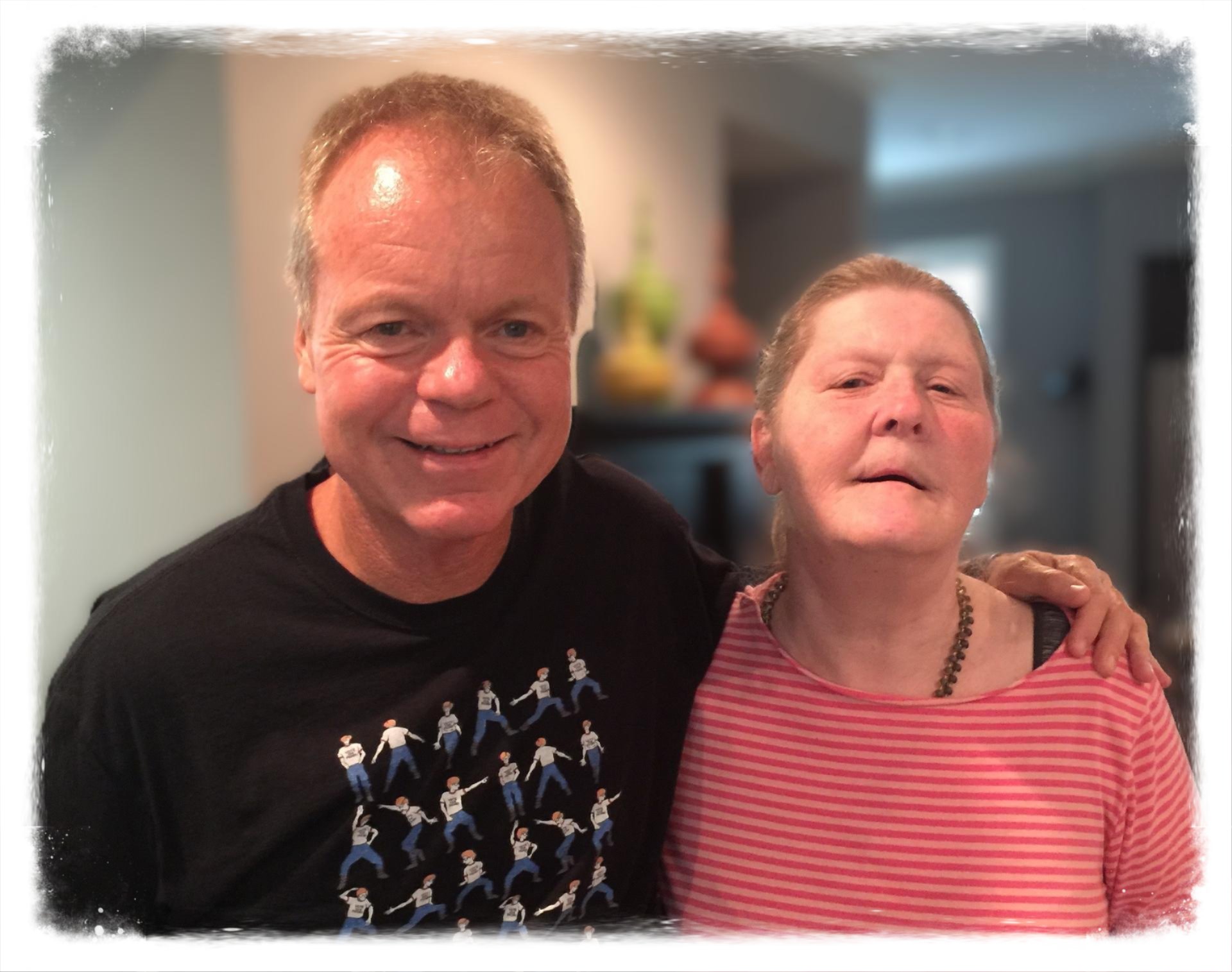
“It hasn’t always been perfect,” says Jim Tremayne, brother of MSCH – San Diego resident, Reesa. As in most sibling relationships, “There are times when I get frustrated with her, and times she gets frustrated with me.
“Having said that, I’ve seen Reesa suffer through so much. Beyond the social stigma, beyond the ridicule, and beyond the teasing that often go with having an intellectual disability, Reesa has had some real health challenges over the years. “She developed lupus as an adult. It’s an autoimmune disease, and she developed a bone infection that the doctors really struggled to get rid of. The infection spread to her blood, and eventually they had to remove a part of her femur.
“The doctors told my mom that Reesa would never walk again. They said that she should be put into a nursing home. But they didn’t tell Reesa that. “No one told Reesa she couldn’t walk. And I don’t know
how she did it, but after the surgery, she just willed herself up out of that wheelchair, and she just started walking!”
“And she’s still walking today – at 70 years old. She walks with a bit of limp because one leg is longer than the other now – but she doesn’t give up and she does it without complaining.
“Reesa has always been an example for me of bearing up under adversity.” |
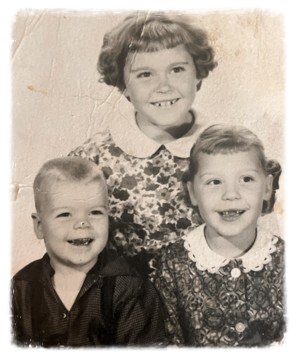
Reesa with brother, Jim, and sister, Kelly. |
“This is the child God gave us.” Jim continues, “Reesa was born in 1955. Shortly after she was born, doctors determined she had a disability. They encouraged my parents to put Reesa into a state hospital. That was just what you did back in 1955. “But my parents, because of their commitment, and religious beliefs, they refused to do that. They raised her and they did everything they could for her, to provide for her and to give her a typical upbringing. “I really look at my parents as heroes – as pioneers. They went against the tide, and it was at great personal sacrifice to themselves. They didn’t have special education at that time. So my dad, a machinist by trade, worked another part-time job that paid for Reesa’s private school.
“My mom and dad were just committed to the idea that Reesa was their daughter and they were not going to drop her off at at a state hospital. It was like they thought, ‘This is the child God gave us so we’re going to do everything in our power to give her a good life and she’s going to be a member of our family.’ They were truly committed to that.” |
“Reesa’s presence in our family had a big impact on my life.”
“Growing up, even as a little kid, I could sense that we were just not a typical family,” adds Jim. “There was a bit of a stigma attached to intellectual disabilities, especially at that time. When we went to restaurants, or were just out in public in general, I could sense we were being stared at.
“As kids, we would play out in the street in the neighborhood, and some kids were really mean to Reesa. I do remember some kids spitting on her, but there were other kids who treated her like she was just one of the kids in the neighborhood. It was a real mix. “Most of our social contacts were through the church. It was a very small church and it was really like an extended family. Everyone there knew her. I remember some wonderful moments of people there being amazingly gracious and kind and accepting.” |
Reesa, ready to board the bus for the Mountain Shadows Outreach Day Program. |
“Had you asked me when I was 16 or 17 years old if I would consider being a special education teacher, I would have told you it was the last thing I would do.”
Jim adds, “There was a movie, The Ringer, with Johnny Knoxville. Johnny played a character who pretends to be disabled and enters the Special Olympics. The plan is for his uncle to bet on the outcome of the games, and when Johnny, who really had no disability, would win, they’d make a bunch of money.
“But Johnny moved into the dorm with the intellectually disabled adults – and he found out their humanity ran far deeper than his. He eventually realized how much he’d learned from them.
“I had that same experience. The Baptist church owns a camp in Crestline. I was contacted by the director of that camp when I was a freshman in college, asking me to volunteer to be a cabin counselor. Everything in me wanted to say no, but Reesa had gone to the camp year after year and had loved it. And I knew there were other families that wanted to send their children there, so I thought, ‘I’ll go for a week. I’ll volunteer. I’ll do my thing, then I’ll be done.
“Well, due to this experience, when I went back to college in the fall, I changed my major … “ |
“There was a genuine joy there. A genuine love of life. An acceptance of one another.” “At the camp, everything was just so lighthearted,” says Jim. “Everybody was having fun. The word I want to use to describe the campers is genuineness. They were who they were. There was no pretense. There was no, ‘Hey look at me. I’m cool!’ attitude. “And the people working there, they were just good, kindhearted, genuine people.
“Going through high school, I thought there were just so many social games that were played. You know, ‘What clique do you belong to?’ But then you go and spend time with people with special needs and all that is off the table. None of that matters. There was a genuine joy there. A genuine love of life. An acceptance of one another. That really stuck with me. And, as I said, I returned to college in the fall and changed my major.
“I saw the commitment my parents had in raising Reesa. That, combined with my experience at the camp, made me decide to become a special education teacher. I felt as a school teacher, I could help other parents and special needs children.” |
|
|
Reesa, writing cards at MSCH-San Diego. |
“Suddenly I felt like I was the Lone Ranger. I was the only teacher working with the students with intellectual disabilities.”
“After college, I started teaching at a development center in Ontario. The facility was fully staffed. We had our own school psychologist on site, our own adaptive PE teacher, two speech therapists, our own nurse. We had a therapy pool where the kids got to go swimming. It was like the Cadillac of schools. It was an environment where I was just surrounded by people who were nurturing and loving. That really solidified that I had made the right choice in becoming a special education teacher.
“Then we moved. I was offered a job in the San Marcos district. This was back in 1990 – and it was initially a shock. Suddenly I felt like I was the Lone Ranger. I was the only teacher working with the students with intellectual disabilities. “I grew greatly through that experience. We all grew together. We adapted. We had a supportive staff and they all helped us along. And that is what I ended up doing for 32 years. I retired from San Marcos Middle School two years ago.
“I know I wasn’t the best teacher, or wasn’t always the most creative, but I felt like the one thing I could bring to my job that maybe others couldn’t was that I had a sense of what the parents were struggling with, what they were going through, their concerns for the future. “I thought I could talk openly and honestly about what the future for their children might look like. I wanted to allay some of their fears and let them know there is a path forward. “I wanted to let them know there are places like
Mountain Shadows that are filled with wonderful people. People doing what they do from the heart.
People that care. I felt it was encouraging to a lot of parents to know that.” |
“Reesa was living at another home and we wanted to get her closer to us. I knew Jan Spain from working with her at the school district, and she sung the praises of Mountain Shadows.
“Paula and I went on a tour of the facility. We loved it. They said, ‘Why don’t you bring Reesa down and we’ll have her meet the residents?’
“Reesa was adamant she didn’t want to move. She kept saying, ‘No. Not moving. No. No.’ So we were concerned. We thought it was going to be a tough sell.
“But we went to Mountain Shadows and Reesa had dinner with some of the residents at Birch house. Some of them are still there. Harry’s still there. Kenny is still there. And at the end of the meal, Reesa looked at my wife and said, ‘Okay, I’ll move here!’ We were surprised, but it was a godsend. We were so happy. And Reesa has been at Birch house for the last 10 years. “I’m just so in awe of the staff at Mountain Shadows. Reesa has been so well cared for and we are just so appreciative.”
“My wife and I moved to Oregon about 2 years ago. We had initially planned to move Reesa too. But, when we started looking around, we realized there just is no place like Mountain Shadows.
“What I mean by that is that Mountain Shadows offers multiple levels of care. Since Reesa has lupus, we know health complications could arise at any time. Though she is ambulatory now, she could become wheelchair bound almost overnight. That is a reality we live with.
“We made the decision to stay at Mountain Shadows because it is her home. She’s lived there for 10 years. She’s had the same roommates for 10 years. She’s so well cared for, and should a medical issue arise, she can be moved to another house that provides a higher level of care. We don’t have to move her again. “We, my whole family, we’re just so grateful to Mountain Shadows.” |
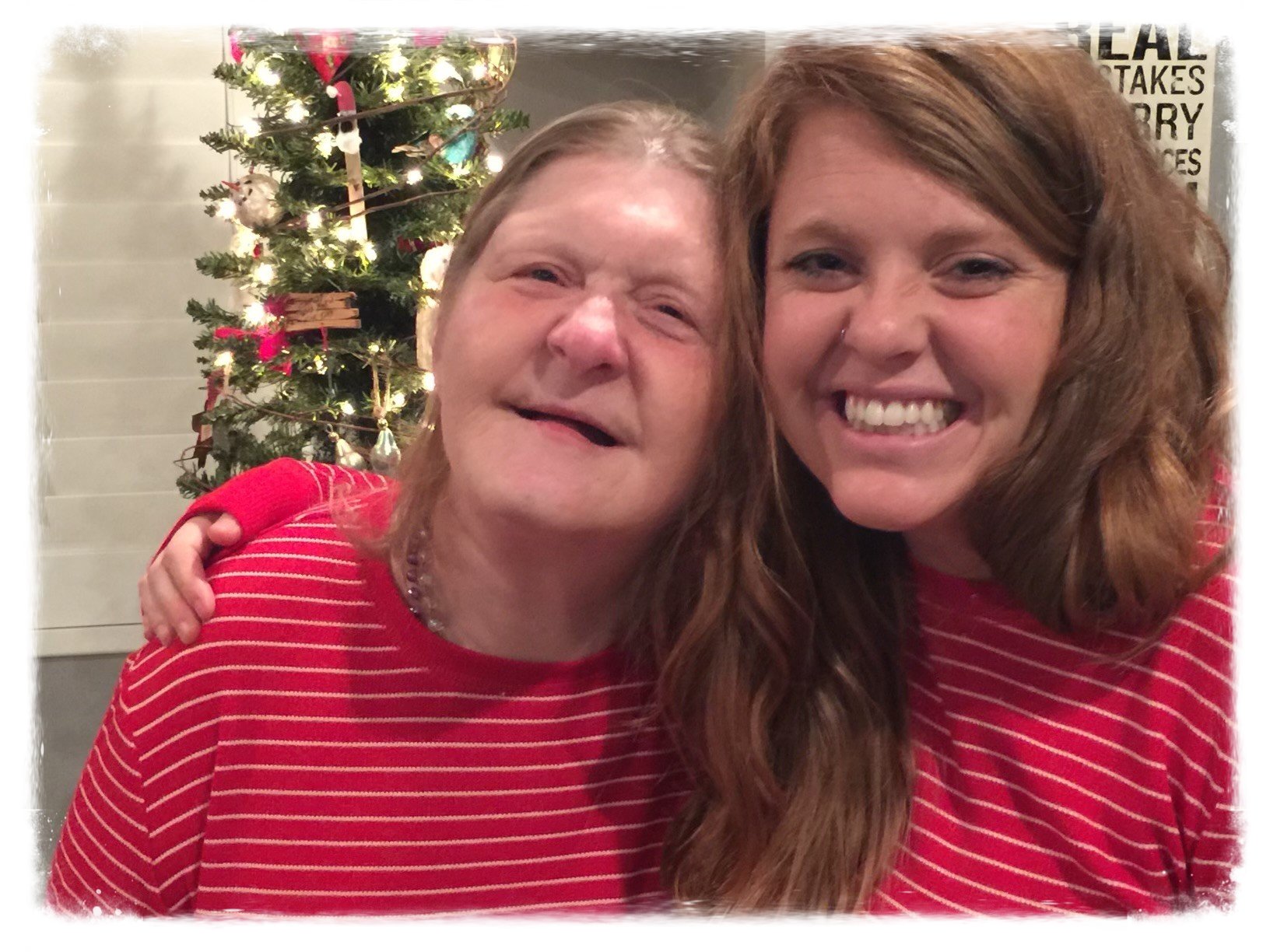
Reesa and Jim’s daughter, Caity, wearing matching pajamas on Christmas morning. |
Says Sarah Tedrow, MSCH-San Diego, “Reesa’s brother, Jim, is probably the kindest person EVER. He’s always thinking about Reesa and he’s always thinking about the staff. He shares his appreciation for what everyone does here.” |
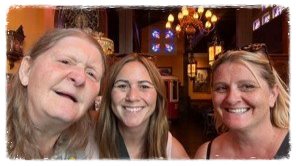
Beloved family friends, Monique & Brigid, with Reesa at
one of their special dinner outings. |
Sarah continues, “Jim, without fail, would come to see Reesa every week. And when he moved to Oregon, he set it up so that his family friends would come and visit her. They come and take her out for dinner every two weeks. It’s very sweet.” |
Adds Sarah, “Mountain Shadows – there’s nothing else like it. We’ve created a community-based feeling for the residents, like it’s their own neighborhood. We’ve created a safe community where they can go out and be safe.”
|
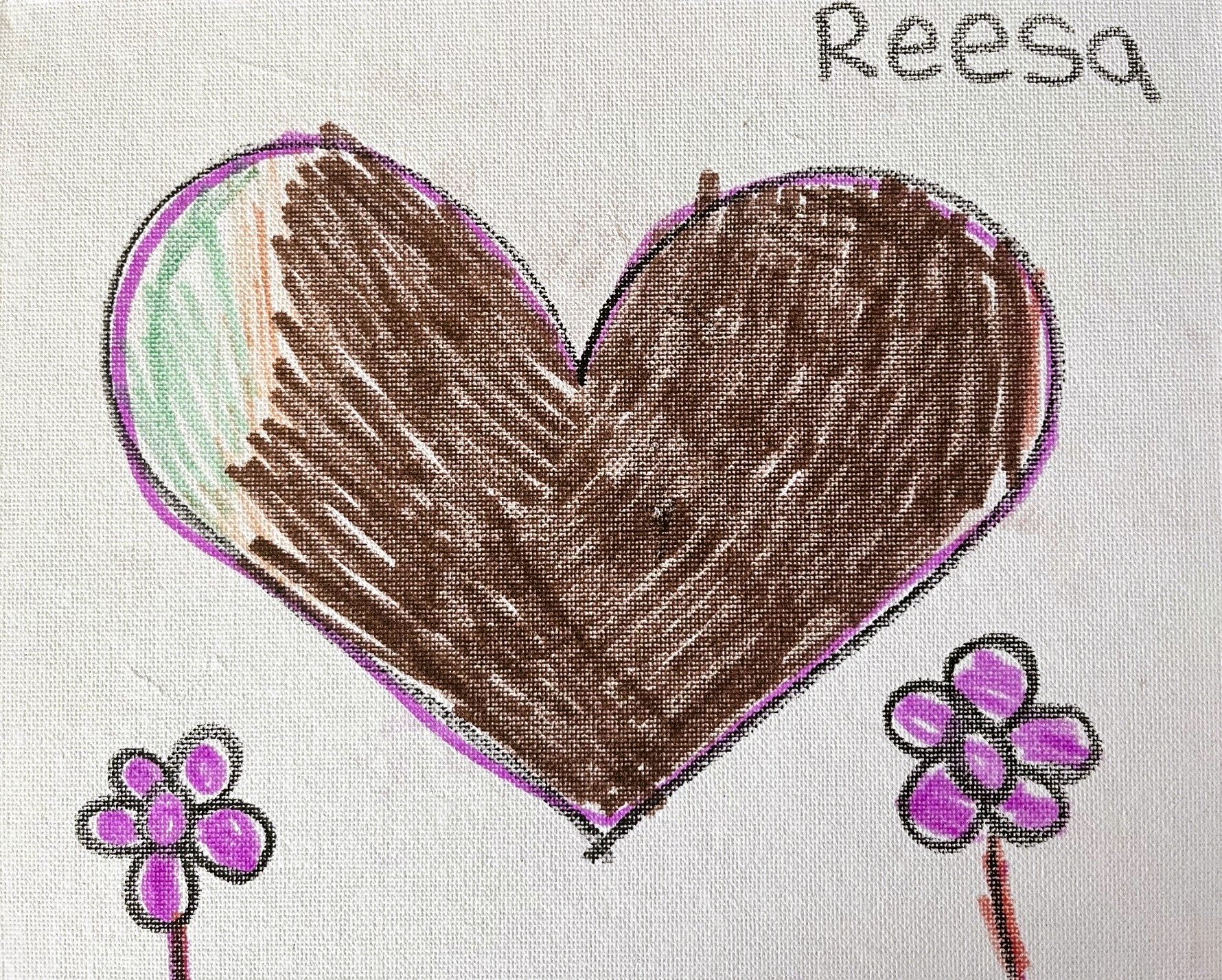
Reesa’s artwork on canvas. |
“Reesa is in my heart. And she has a gift of working her way into many people’s hearts.”
~Jim
We, the Mountain Shadows Family, serve as an Anchor of Hope for residents like Reesa – providing a safe, stable and loving community to call home.
No one told Reesa she couldn’t walk – so she did. And, against the odds, she still walks across the Mountain Shadows campus today. Oh, she walks with a bit of limp because one leg is longer than the other now – but she doesn’t give up and she does it without complaining.
Reesa’s limp may grow, but her spirit remains indomitable.
And we will walk with her until the last step – and beyond – because she has worked her way into our hearts. Perhaps one day, if you are are ever so fortunate, she will work her way into yours… |
The Mountain Shadows Foundation –
Because We CARE |
Thanks to YOUR SUPPORT, the Mountain Shadows CARE program provides recreational and social experiences to residents and participants adding meaning and richness to their lives.
It’s easy for you to help us continue to provide activities like this – activities that improve the quality of our residents’ lives in fulfillment of their dreams. Here are some ways you can help ensure these crucial activities can continue for years to come: -
Make a one-time donation today by clicking on the donate button below.
- Make a monthly or annual contribution.
- Leave a Legacy Gift.
To learn more about the Mountain Shadows Foundation Legacy Society, to include us in your estate plan, or to let us know if you have already designated Mountain Shadows to receive a legacy gift, please contact Mandy Huiras, Director of Development at: mhuiras@mtnshadows.org, or visit our website by clicking here:
Learn More About the Mountain Shadows Foundation Legacy Society Please share this story with your family, friends and co-workers to help grow our Mountain Shadows Family!
To learn more about Mountain Shadows volunteer opportunities, please click below:
Learn about Mountain Shadows Volunteer Opportunities Here |
Mandy Huiras
Mountain Shadows Foundation Director of Development
Contact Mandy today to learn more about the Mountain Shadows Foundation and how you can continue to make a difference in the lives of our residents:
mhuiras@mtnshadows.org |
|
|
Our Contact Information
*{{Organization Name}}*
*{{Organization Address}}*
*{{Organization Phone}}*
*{{Organization Website}}*
*{{Unsubscribe}}* |
|
|
|